Home Electrical Panel Issues Inspectors Commonly Flag
Home inspector flagged your electrical panel neutrals? Learn the most common issues inspectors see and how electricians correct them safely.
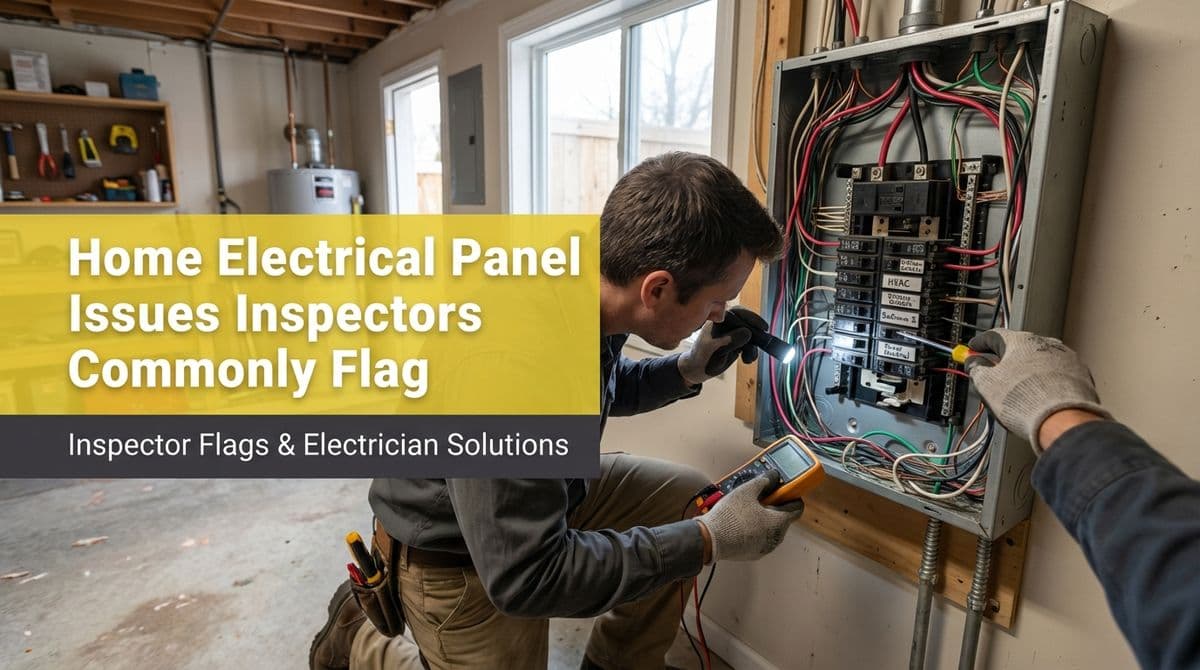
A Home Inspection Flagged the Panel Neutrals
We recently got a call from a homeowner — let’s call her Lisa — who had just gone through a home inspection in Ellijay. The inspector had no problem pointing out what was wrong, but didn’t really explain what it meant in plain English.
Lisa told us, “I need some extra outlets, a new light fixture, and the inspector flagged something strange with the neutrals in the panel. I just need that sorted out.” That last part is what really concerned her. She wasn’t sure if it was a minor paperwork issue or a serious safety problem.
We see this kind of thing all the time during real estate transactions and routine home inspections. So let’s walk through what home inspectors commonly flag in electrical panels, especially around neutral wiring, and how we as electricians actually fix those issues.
What Inspectors Look For in Your Electrical Panel
When we arrived at Lisa’s home, we started by asking the same questions inspectors ask themselves:
- Is the panel safely accessible and properly labeled?
- Are the breakers correctly sized for the wiring?
- Are neutrals and grounds terminated correctly?
- Is there any visible overheating, corrosion, or DIY wiring?
Home inspectors aren’t allowed to start tearing things apart, so they work from what they can see with the cover off. When they flag something with neutrals, it’s usually one of a handful of repeat offenders.
Common Neutral Wiring Problems Inspectors Flag
1. Double-lugged neutrals (two wires under one screw)
This is probably the most common comment we see on reports. A “double-lugged” neutral means two or more neutral wires are landed under a single terminal screw on the neutral bar.
Why inspectors flag it:
- Most panel manufacturers specifically forbid sharing neutral terminals.
- One wire can loosen over time, causing arcing and overheating.
- It can make troubleshooting and future work less safe and more confusing.
How we fix it: We carefully loosen the terminal, separate the conductors, and give each neutral its own approved termination point. If the neutral bar is full, we may add an approved add-on neutral bar kit or, if needed, recommend a panel upgrade.
2. Neutral and ground sharing the same terminal
In a main service panel, neutrals and grounds are bonded, but they still must not share the same screw. In subpanels, neutrals and grounds must be separated entirely.
Why inspectors flag it:
- Shared terminations can create unreliable connections.
- In subpanels, improper bonding can cause current to travel on grounding paths and even metal parts of your home.
How we fix it: We separate neutrals and grounds so each conductor has its own terminal. In subpanels, we also make sure the neutral bar is isolated (not bonded) and the ground bar is bonded to the panel can, per code.
3. Missing or improper neutral bonding
In the main service panel only, the neutral must be bonded to the grounding system. In all downstream subpanels, neutrals must be isolated. Inspectors will flag it when this rule is broken.
Why inspectors flag it:
- Improper bonding can cause shock hazards.
- It can also create “stray” current on metal piping or framing.
How we fix it: We verify where the service disconnect is and ensure bonding is done in the correct location only. That might mean installing or removing a bonding screw/strap and correcting how feeders are terminated.
Other Panel Issues That Raise Red Flags
Overcrowded or outdated panels
While we were looking at Lisa’s neutrals, we also checked the overall condition of the panel. Inspectors often flag:
- “Tandem” breakers stuffed into spaces not designed for them
- Panels that are full with no room for new circuits
- Older brands known for reliability problems
In Lisa’s case, she needed additional outlets and a new light fixture. That meant we needed room in the panel for new circuits as well. If there’s no safe space left, we’ll talk through options like a panel upgrade or adding a properly sized subpanel.
Improper wire sizes or breaker sizes
Inspectors also look for mismatches between wire gauge and breaker size. For example, a 20-amp breaker on wire that’s only rated for 15 amps is a fire hazard.
How we fix it: We either resize the breaker to match the conductor, or run new correctly sized wiring. Which route we take depends on the circuit’s load and what the homeowner plans to use it for.
What We Did for Lisa’s Panel
Back to Lisa’s home: the inspector had noted “multiple neutrals under one screw” and “neutral/ground sharing terminals.” Once we opened the panel, that’s exactly what we found — common issues from past work that probably pre-dated her ownership.
We:
- Separated all double-lugged neutrals so each had its own termination
- Moved grounds to dedicated ground terminals
- Verified proper neutral bonding at the main service only
- Checked breaker and wire sizes while we were there
After correcting the panel, we installed the additional outlets and the new light fixture she wanted, all on properly sized circuits with available breaker spaces.
What to Do If Your Inspector Flags Panel Neutrals
If your inspection report mentions neutrals, bonding, double-lugging, or “deficient panel terminations,” here’s what we recommend:
- Don’t panic – many of these issues are common and fixable.
- Get a licensed electrician to open the panel and evaluate the findings.
- Ask for photos so you can see the before-and-after corrections.
- Bundle work – if you’re already paying for a panel visit, it’s a good time to add outlets, lights, or other small upgrades.
If you’re in our area and an inspector has flagged your electrical panel, we’re happy to come out, explain what the report means in plain language, and make the repairs so your home is both safe and ready to pass re-inspection.