Home EV Charger Installation: Garage vs. Driveway and Cost
Thinking about a home EV charger? Learn real-world costs, garage vs. driveway options, and what to check in your home before you install.
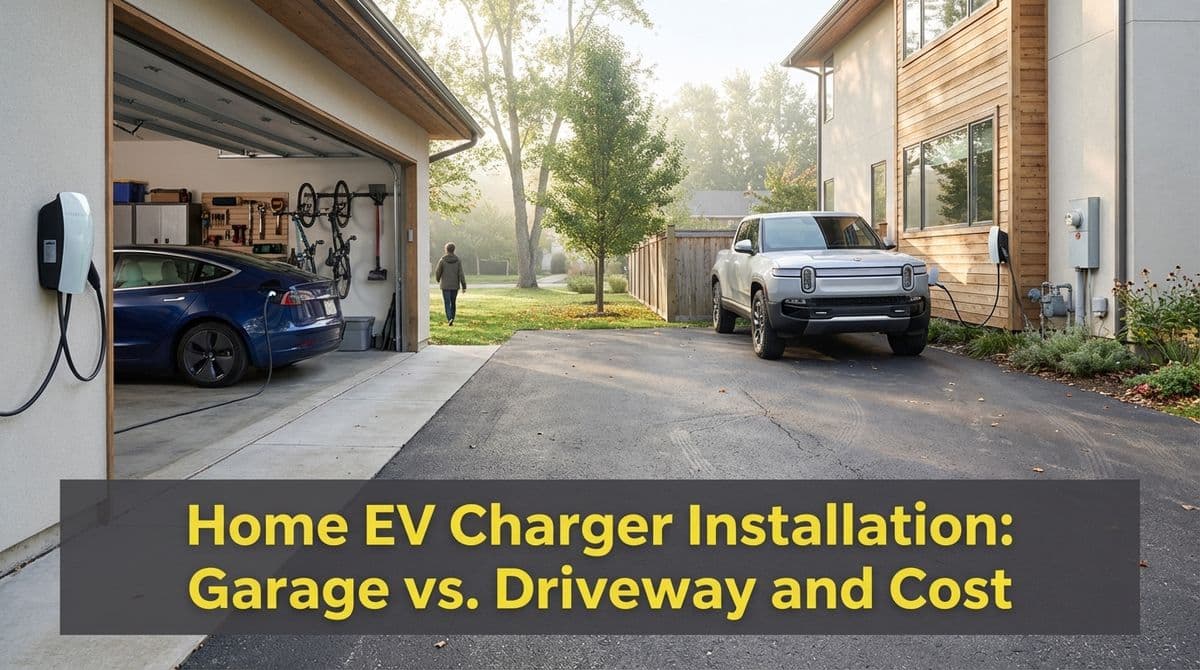
Planning a Home EV Charger? Here’s What to Know First
We recently got a call from a homeowner — let’s call her Lisa — whose son was getting a new electric vehicle through his company. They were excited, but also a little overwhelmed.
Lisa’s main questions were the same ones we hear every week:
- “Should we put the charger in the garage or out by the driveway where he actually parks?”
- “What does a typical installation cost?”
- “How does this affect resale value later on?”
In Lisa’s case, the electrical panel was in the basement, her son parked outside in the driveway, and she and her husband used the garage. Sound familiar? If you’re in a similar situation, let’s walk through how we think about these decisions during an in-home estimate.
How Much Does Home EV Charger Installation Typically Cost?
When Lisa asked about price, she gave a wide range: “Are we talking $1,000… or $5,000?” That’s understandable — online estimates can be all over the place. For a typical Level 2 home charger installation in our area, here’s what we usually see:
- Basic garage installation: Often around $1,000 and up, assuming:
- The electrical panel has enough capacity
- The run of wire from the panel to the charger is short
- Minimal or no drywall repair is needed
- Exterior (driveway-side) installation: Typically more than a garage install because:
- We may need to run longer conduit to reach the driveway
- Outdoor-rated equipment and weatherproof boxes are required
- Sometimes we have to go through masonry or around landscaping
Those are starting points, not guaranteed prices. The real number depends on your specific home and where everything is located. That’s why, like with Lisa, we send a licensed electrician out to look at the panel, the parking area, and the cable routes before giving a firm quote.
Garage vs. Driveway: Which Location Makes More Sense?
Lisa’s son parked outside, but she was thinking ahead: “We may in the end put it in our garage because obviously if we ever resell the house that’s where most people would want it.” That’s a smart way to think — balance current convenience with future resale.
Pros of Installing the Charger in the Garage
- Weather protection: The charger and the car are out of the elements, which can help with longevity.
- Lower cost (often): Shorter wire runs and simpler installations when the panel is nearby.
- Resale appeal: Many buyers expect an EV-ready garage; it’s an easy selling point in listings.
- Security: Equipment is inside, away from tampering and accidental bumps.
If you or a future buyer will likely park in the garage, this is usually the best all-around option.
Pros of Installing the Charger Outside by the Driveway
On the other hand, Lisa’s son parked in a specific spot in the driveway every day. An exterior charging point can make a lot of sense in cases like that.
- Day-to-day convenience: Park where you already park, plug in, and you’re done.
- Flexible parking: Guests or future EVs can charge without rearranging garage space.
- No garage clutter: Keeps cables and hardware out of the main garage walkways.
To make an exterior setup work well, we use weatherproof, outdoor-rated equipment. That was one of Lisa’s big questions: “They’re outside at parking lots — are they weatherproof at homes too?” The answer is yes, as long as we install proper NEMA-rated enclosures, in-use covers, and outdoor-rated conduit and fittings.
Key Technical Considerations Before You Decide
Cost and location are important, but the behind-the-scenes details matter just as much. When we come out for an estimate, here’s what we look at and discuss with you:
1. Panel Capacity and Location
- Panel size: We check your main service size (e.g., 100A, 150A, 200A) and available capacity to add a 40–60 amp circuit for the charger.
- Distance to charger: Longer runs from a basement panel to a driveway or far-side garage wall increase material and labor costs.
- Code compliance: We perform a load calculation to be sure your home can safely handle the new circuit.
2. Wiring Path and Wall Construction
Lisa asked whether drywall damage would affect cost — and it can. We consider:
- How we’ll route the cable: Through basement ceilings, garage walls, or along the exterior in conduit.
- Sheetrock repair: Minimal access holes keep repair costs and disruption down.
- Obstacles: Brick, stone, finished ceilings, and long detours around obstacles all impact price.
3. Charger Type and Future-Proofing
- Hardwired vs. plug-in: Many homeowners choose a 240V receptacle (like a NEMA 14-50) with a wall-mounted EVSE, while others prefer a fully hardwired unit.
- Amperage: We’ll match the circuit size to your vehicle’s needs and, if you like, plan for a future EV with higher charging speeds.
- Placement: We measure cable length so it easily reaches your charge port without stretching or tripping hazards.
How to Choose What’s Right for Your Home
When we wrapped up Lisa’s call, we scheduled a visit so we could look at the panel in the basement, the garage layout, and the son’s usual parking spot outside. That’s really the best way to make a smart decision.
Before you have an electrician out, it helps to think through a few questions:
- Where will the EV be parked most of the time over the next 5–10 years?
- Do you plan to sell the home in the near future, and what would appeal to buyers?
- Is your budget flexible enough to choose the most convenient location, or do you need the most cost-effective option?
- Could you or a future owner have more than one EV down the road?
If you’re not sure, we’re happy to walk the house with you, talk through options, and give separate pricing for garage vs. exterior installs, just like we did for Lisa. Our goal is to help you land on a setup that’s safe, code-compliant, convenient today, and attractive for resale tomorrow.