Why Your Kitchen Outlet Breaker Keeps Tripping
Kitchen outlets keep losing power? Learn what GFCI, arc-fault, and combo breakers do, why they trip so often, and when it’s time to call an electrician.
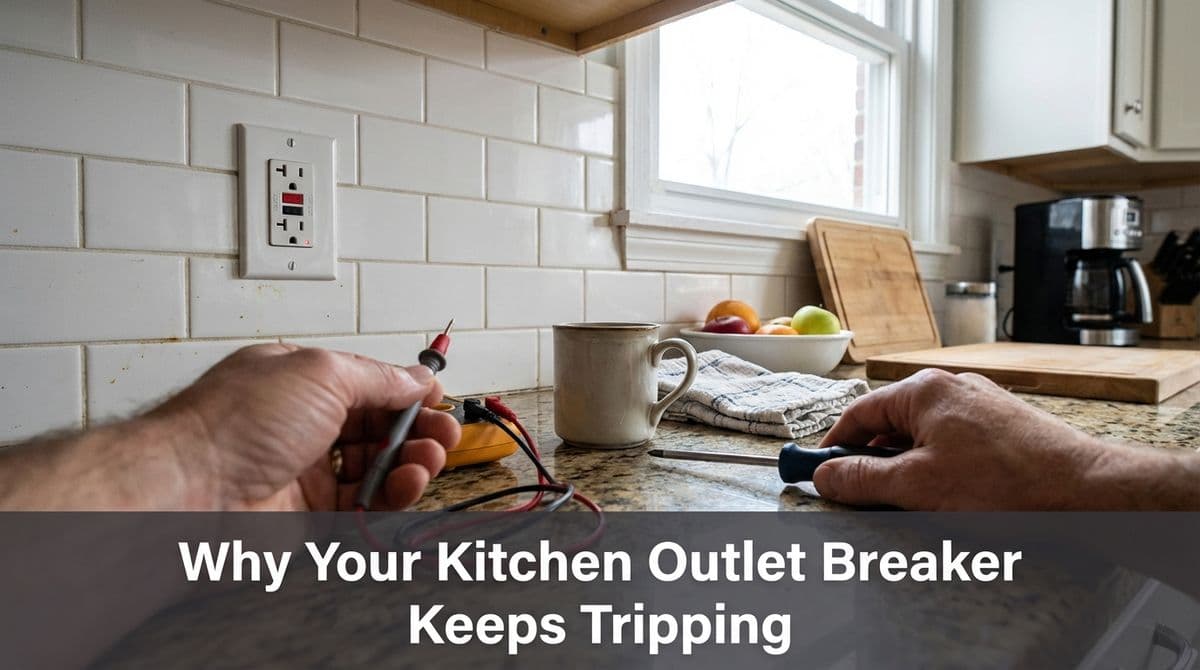
Why Your Kitchen Outlet Breaker Keeps Tripping
We recently got a call from a homeowner — let’s call him Kevin — who was frustrated with a breaker that kept tripping on his kitchen outlets. The house was only about eight years old, but the kitchen countertop circuit was constantly cutting out, and the breaker itself wouldn’t reset properly.
Kevin told us the builder probably used “cheap materials,” and that another person had already said his breaker was “out of date.” When we asked if the breaker had a little test button on it, he said yes — and that when he pushed it, the indicator stayed red.
That told us a lot. We were likely dealing with a GFCI (ground-fault) or AFCI (arc-fault) breaker protecting his kitchen outlets — exactly the type of breaker that causes a lot of calls just like Kevin’s.
Why Kitchen Breakers Are “The First to Go”
During our conversation, Kevin mentioned that the breaker controlled some kitchen appliances and the countertop outlets, but the refrigerator seemed fine. That’s actually pretty typical. Kitchen circuits work harder than almost anywhere else in the house.
Why kitchen circuits are under stress
Here are a few reasons those breakers tend to be the first to start tripping:
- High-demand appliances like toasters, air fryers, coffee makers, and microwaves all sharing the same circuit.
- Moisture and spills around countertops, sinks, and dishwashers — which is exactly why codes require GFCI or combination protection.
- Frequent plugging and unplugging of appliances that can wear out outlets and cords over time.
- Older or cheaper breakers that may become more sensitive or simply fail with age.
So when a kitchen breaker starts tripping a lot, it doesn’t always mean something catastrophic — but it does mean the breaker is trying to tell you something.
GFCI vs. Arc-Fault vs. Combo Breakers
When Kevin told us his breaker had a test button and stayed red when pressed, we knew we were dealing with either a GFCI breaker, an AFCI breaker, or a combination of the two. We get questions about the difference between these all the time.
GFCI breakers: Protection from shock
GFCI (Ground Fault Circuit Interrupter) breakers are designed to protect you from electrical shock, especially around water. They constantly compare the current going out on the hot wire to the current returning on the neutral. If there’s even a small difference — as little as 4–6 milliamps — they trip almost instantly.
You’ll often find GFCI protection on:
- Kitchen countertop circuits
- Bathroom outlets
- Garage and outdoor outlets
- Basements and unfinished areas
If your kitchen breaker trips when using something near the sink, or when there’s moisture present, a GFCI function may be doing its job.
Arc-fault (AFCI) breakers: Protection from fire
AFCI (Arc Fault Circuit Interrupter) breakers are designed to detect dangerous arcing — tiny sparks that can occur from damaged wires, loose connections, or failing cords. These arcs can generate enough heat to start a fire inside your walls.
Modern codes now require AFCI protection on many household circuits, including parts of the kitchen in newer homes. That’s why Kevin’s eight-year-old home likely came with arc-fault or combination breakers from the builder.
Combination GFCI/AFCI breakers: Best of both worlds
Because we see so many nuisance trips and failures with older GFCI and AFCI breakers, we’ve made a standard practice: when those older models give trouble, we replace them with combination GFCI/AFCI breakers from reputable manufacturers. They provide both shock and fire protection in a single unit and, in our experience, are more reliable than the early generations.
We explained to Kevin that we routinely remove the older-style breakers and install these combo versions. We’ve done this on countless service calls and have not had callbacks on those circuits once they’re upgraded and properly sized.
Normal Tripping vs. a Failing Breaker
One of the most important things we want homeowners to understand is the difference between a breaker doing its job and a breaker that’s gone bad.
Signs your breaker is working properly
It’s probably just doing its job if:
- The breaker trips only when you use several big appliances at once on the same circuit.
- It resets fully and stays on once you turn off or unplug something.
- The test button works consistently (trips when pressed and resets properly).
Signs your breaker may be failing
It may be time to have us look at it if:
- The breaker won’t reset or immediately trips again with very little load.
- The indicator window stays red or shows a fault even after you unplug everything.
- The breaker feels hot to the touch or has a burned smell.
- You see visible cracks, discoloration, or buzzing from the breaker or panel.
In Kevin’s case, the breaker would not reset properly and the red indicator stayed on. That’s a strong hint the breaker itself may be compromised, not just that the circuit is overloaded. That’s why we recommended replacement with a new combination breaker.
How We Diagnose a Tripping Kitchen Breaker
When we schedule a visit like Kevin’s, we try to get a picture of the electrical panel with the door open beforehand. That lets us see the manufacturer, model, and exactly which type of breaker we’re dealing with so we can arrive with the correct replacement on the truck.
On-site, our typical process looks like this:
- Identify the circuit – Confirm which outlets and appliances the problem breaker controls (countertop receptacles, dishwasher, disposal, etc.).
- Inspect the panel – Check for loose connections, corrosion, heat damage, or signs of poor installation from the original builder.
- Test the breaker – Use proper instruments to see if the breaker is tripping at the correct current or if it’s overly sensitive or defective.
- Inspect the circuit – Check the outlets and visible wiring for damage, loose terminations, or signs of arcing.
- Replace and upgrade if needed – Install a new, properly rated combination GFCI/AFCI breaker if the old one is failing or obsolete.
We also walk homeowners through safe usage habits so they’re less likely to overload those kitchen circuits in the future.
Simple Things You Can Check Before Calling
There are a few safe checks you can make before you pick up the phone:
- Unplug small appliances from the affected outlets (toaster, coffee maker, air fryer, etc.).
- Reset the breaker correctly by turning it fully to the OFF position, then firmly back to ON.
- If there are GFCI outlets on the same counter, press their RESET buttons as well.
- Note whether the trip happens only with a specific appliance — that device itself may be faulty.
If the breaker still won’t reset, or immediately trips again with nothing plugged in, that’s when it’s time to have us step in. Electrical panels aren’t a DIY place — one wrong move can be dangerous.
When to Call an Electrician
If your kitchen outlet breaker keeps tripping, especially one with a test button and an indicator that stays red, you may be dealing with the same issue Kevin had: an older, problem-prone GFCI or arc-fault breaker that needs to be replaced and upgraded.
We can diagnose whether it’s a true wiring issue, an overloaded circuit, or simply a failing breaker. Then we can replace it with a modern combination GFCI/AFCI breaker that protects your family from both shock and fire — and keeps your kitchen up and running the way it should.
When you’re ready, we’re happy to take a look at your panel, answer your questions, and make sure your kitchen circuits are safe, code-compliant, and reliable.