How to Safely Power a Garage Gym: Outlets, Heat & Lights
We turned a drafty garage into a safe, comfortable home gym with the right outlets, heat, sauna power, and motion-sensor lighting—here’s how we recommend doing it.
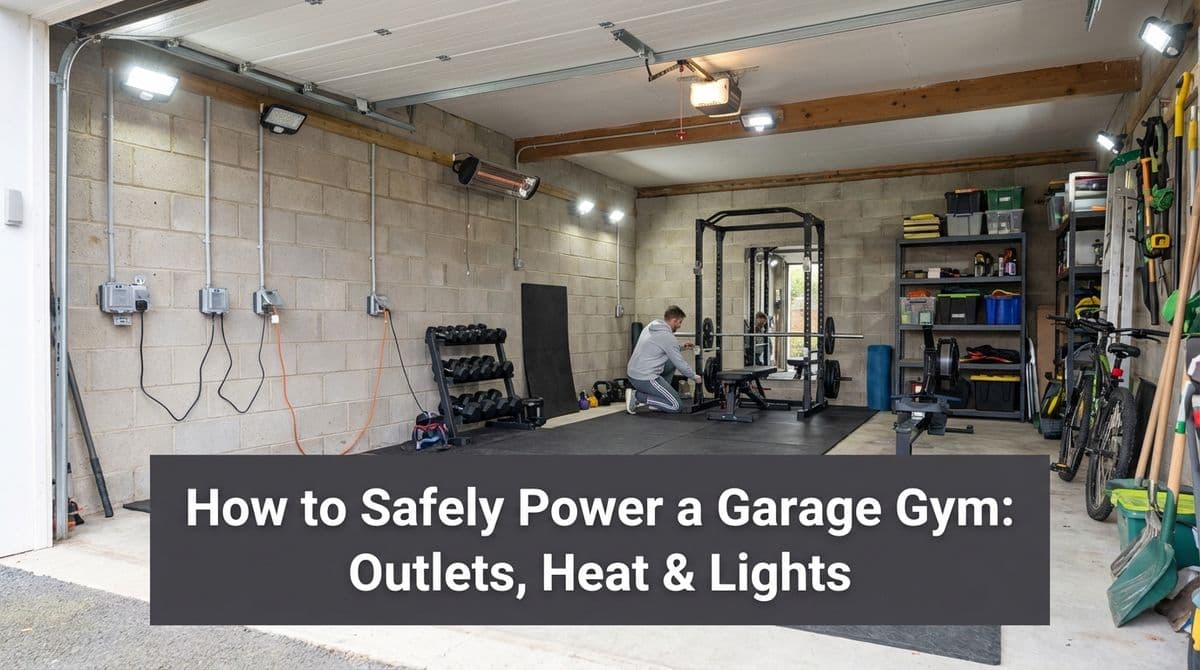
Turning a Garage Into a Gym – Without Tripping Breakers
We recently got a call from a customer — let's call her Michelle — who wanted to turn her small garage into a workout area. As a licensed electrical contractor here at our electrical company, we get this type of request a lot.
Michelle wanted to run two electric heaters, move a plug-in sauna box out to the garage, add extra outlets, and install a couple of motion-sensor light switches. Right then, our ears perked up — that’s a lot of load for a space that usually only has one lonely outlet and a light.
She’d already been running an extension cord under the garage door for one of the heaters. That’s exactly the kind of situation we like to fix before it turns into a tripped breaker, melted plug, or worse.
Step One: Know What’s Already On the Circuit
Before we touch a wire in any garage gym project, we start where we started with Michelle: the electrical panel and existing circuits.
In her case, there was a subpanel serving the small outbuilding and garage, and she believed there was extra space for new breakers. That’s good news, but we still needed to know:
- What size breaker currently feeds the garage outlet (usually 15A or 20A)
- What else is on that circuit (lights, doors, other outlets)
- Whether the wiring is properly sized and grounded
Homeowner tip: Look at your panel labels. If your garage outlets are on the same circuit as half the basement, you probably don’t want to add heaters and a sauna to that same line.
Heaters in a Garage Gym: Why Dedicated Circuits Matter
Space heaters are power hogs. Most portable electric heaters pull 1,500 watts, which is about 12.5 amps on a 120V circuit. On a 15-amp circuit, that’s already most of the capacity; on a 20-amp circuit, that’s still a big chunk.
Michelle wanted to run two heaters, plus whatever else she might be using in the garage. That’s too much to safely share a typical general-purpose circuit.
Our usual recommendations for garage gyms are:
- Dedicated 20A circuit for each large heater (or one 240V heater on its own circuit)
- GFCI protection for outlets in a garage, as required by code
- Outlets mounted where cords are off the floor and not tripping hazards
For Michelle, we proposed running new dedicated circuits from the subpanel for the heaters, instead of stacking them onto the existing garage outlet.
Moving a Plug-In Sauna Box to the Garage
Next up was her sauna box, which currently plugged into a regular outlet inside the house. Many plug-in home saunas are also around 1,500 watts, though some are higher. That’s similar to a space heater in terms of load.
When we move something like that to a garage, we look at:
- Manufacturer’s label (voltage, amperage, and whether it requires a dedicated circuit)
- Circuit size and how much else will be on that same line
- Location and moisture — garages can be damp, so GFCI is key
If the sauna and a heater will ever run at the same time, we generally avoid putting them on the same 120V, 20A circuit. For Michelle, the safer route was to give the sauna its own properly rated, GFCI-protected outlet, or at least keep it separate from the heater circuits.
Homeowner tip: Before you move your sauna or any big appliance, snap a picture of its label and show it to your electrician. That saves time and helps us size everything correctly.
Smart Outlet Layout for a Functional Gym
Michelle started by asking for “a couple of outlets,” but as we walked through the plans, we talked about layout and usage more broadly:
- Where the heaters would sit (to avoid blocking air flow)
- Where the sauna would live
- Where she might want to plug in a TV, fan, treadmill, or phone charger
In many garages, we suggest:
- Dedicated outlets on separate circuits for heavy loads (heaters, sauna)
- General-purpose outlets for lighter loads spaced along the walls
- Exterior-rated outlet on a screened porch or exterior wall when requested
Michelle also wanted an outlet added to an outside wall by her screened porch. That’s a perfect time to update to weather-resistant, in-use covers and GFCI protection outdoors.
Motion-Sensor Lighting for Gyms and Living Spaces
The last part of Michelle’s wish list was motion-sensor lighting — one or two motion detectors so the lights flip on automatically when someone walks in.
In the garage gym, this is especially handy when your hands are full of weights or gear. For her upstairs bedrooms and family room (where she also wanted recessed can lights), we talked through two main options:
- Occupancy/vacancy sensor switches that replace a standard wall switch
- Integrated sensor fixtures in certain locations like hallways or closets
For most homeowners, we recommend sensor switches because they’re easy to adjust, and we can fine-tune:
- Timeout delay (how long lights stay on)
- Sensitivity (so pets don’t turn lights on all night)
- Manual override when you don’t want auto-off
Michelle’s plan included new can lights in three bedrooms and a family room, so we made sure the sensor placement would be compatible with the new lighting layout.
When to Call a Pro (and What to Expect)
Between heaters, a sauna, general outlets, porch power, and motion-sensor lighting, Michelle’s project was more than just “adding a couple of outlets.” Any time you’re:
- Adding multiple high-wattage devices (heaters, saunas, treadmills)
- Running power to garages, porches, or outbuildings
- Updating lighting layouts with cans or sensors
…it’s smart to bring in a licensed electrician.
On our visits, we typically:
- Inspect your panel and verify available capacity
- Measure and plan dedicated circuits where needed
- Make sure everything is code-compliant, grounded, and GFCI-protected
- Talk through how you’ll actually use the space day to day
If you’re thinking about turning your garage into a home gym, sauna corner, or multi-use space, we’re happy to look it over, give you options, and make sure you can work out in comfort without overworking your electrical system.