How Deep Does an Electrical Line Need to Be Buried?
Planning a new electrical line across your yard? The answer depends on what the line will power, whether it’s 120V or 240V, and whether you use conduit or direct-buried cable.
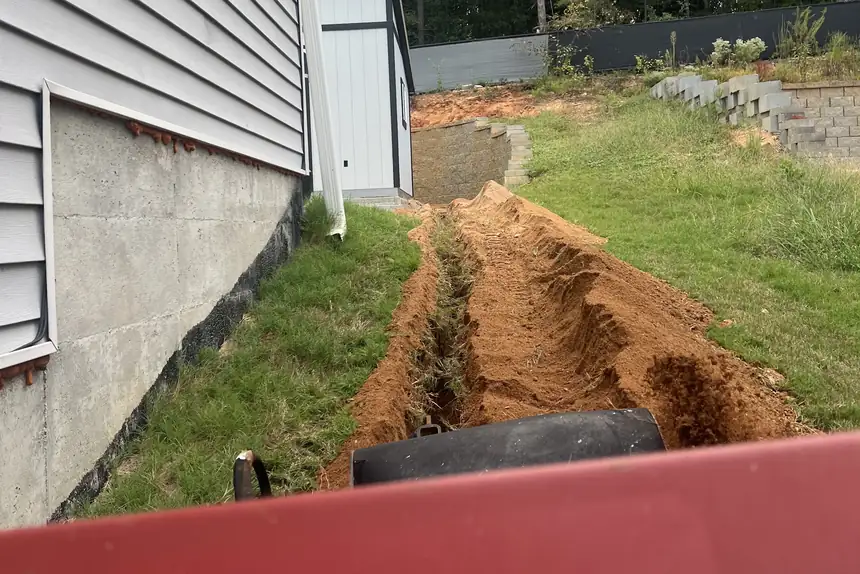
A shed with a light and an outlet can look just like a workshop from the house. What you plan to plug in changes what goes underground. Across an ordinary Georgia lawn, 12 inches of cover can be enough for a qualifying 120-volt residential branch circuit. For a 240-volt circuit or a 120/240-volt feeder, the usual minimum on that same route is 18 inches in listed underground PVC conduit or 24 inches for direct-buried UF cable.
When can 120V shed wiring have 12 inches of cover?
Take a garden shed with one circuit serving a light and a receptacle. Under the 2023 National Electrical Code, Table 300.5(A), column 4, the 12-inch figure can apply in an ordinary yard when all three conditions are met:
It is a residential branch circuit rated 120 volts or less.
Its breaker or fuse is rated 20 amps or less.
GFCI protection covers the buried section. A GFCI breaker at the supply panel is one example. A GFCI outlet installed only at the shed leaves the wire leading to that outlet unprotected by it.
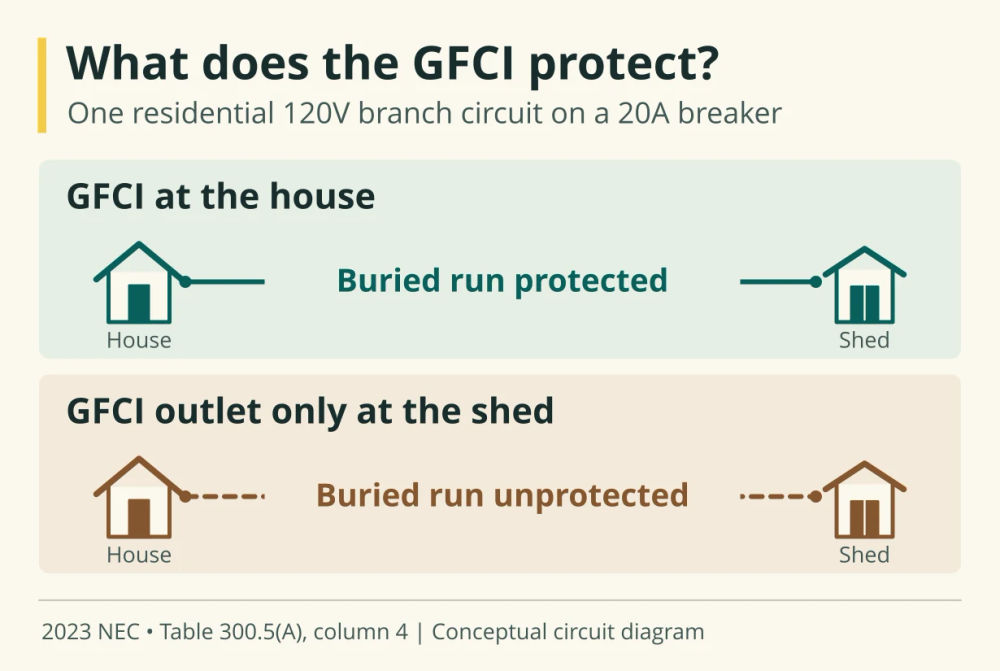
For a qualifying shed circuit to use the 12-inch provision, GFCI protection must already cover the wiring as it enters the ground.
Here’s why the distinction matters even with the same voltage: a 120-volt, 30-amp circuit does not qualify. Neither does a feeder supplying another panel. A branch circuit supplies lights, outlets or equipment directly. A feeder supplies the panel where the individual branch-circuit breakers are located.
How deep does a 240V circuit or garage subpanel feeder go?
Imagine the same shed will house a 240-volt air compressor. A dedicated 240-volt branch circuit is outside the 12-inch rule, even with a 20-amp GFCI breaker. The same applies to a 120/240-volt feeder for a detached garage panel, even if the first outlets you use are all 120 volts.
Here is how the wiring method changes the minimum cover across an ordinary lawn for either of those runs:
18 inches over PVC electrical conduit listed for direct burial without concrete encasement.
24 inches over direct-buried Type UF or UF-B cable listed for that use.
6 inches over rigid metal conduit (RMC) or intermediate metal conduit (IMC). This figure applies to those specific types of metal conduit.
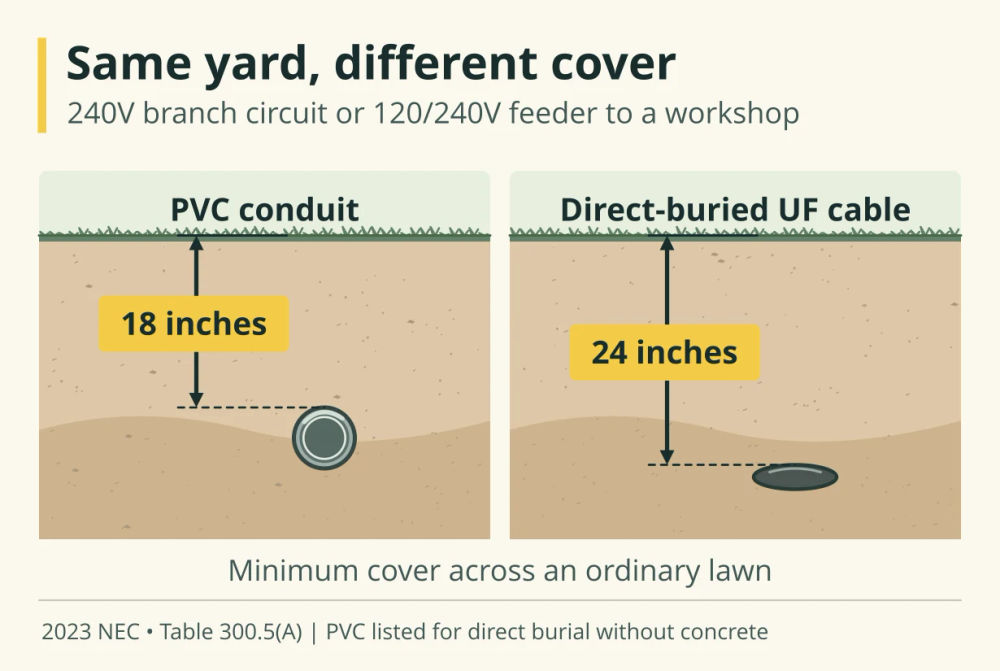
With the voltage and route held constant, these two wiring methods differ by six inches of required cover.
If a workshop is in your plans, give the electrician the voltage and amperage from the equipment nameplate before the trench route is settled. A photo of the compressor label is more useful for planning than simply asking for “power to the shed.”
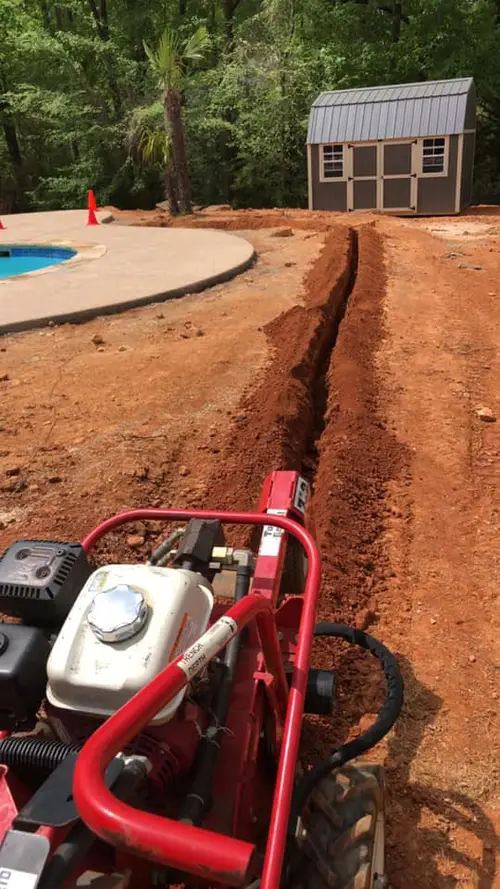
NGES field photo. The open trench shows where the route passes a pool deck. Wiring near a pool needs a separate review. The photo alone cannot establish the circuit voltage or cover.
Where does the burial-depth measurement start?
Note 1 to Table 300.5(A) measures cover from the top of the buried cable or conduit to the finished surface, using the shortest distance. Picture a tape measure starting at the top of the pipe and reaching up to the finished lawn. If the bottom of the trench is only 18 inches down, placing conduit in it leaves less than 18 inches above the pipe.
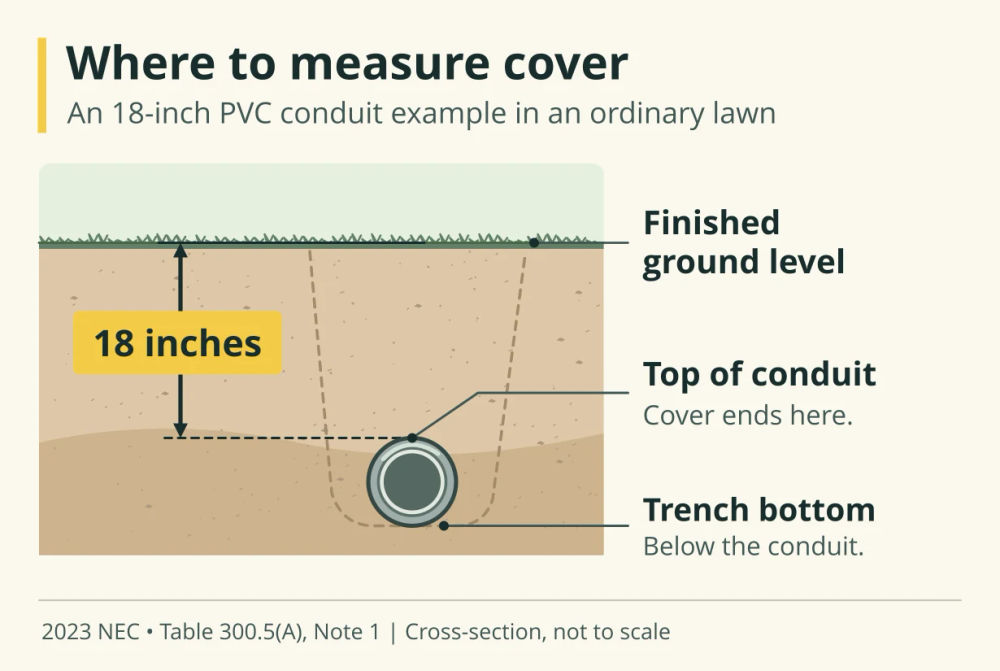
The dashed horizontal line meets the top of the pipe. The trench bottom is lower by the outside diameter of the conduit in this example.
Georgia uses the 2023 National Electrical Code (NFPA 70) with Georgia’s state amendments. Section 300.5(A) points to the minimum-cover table. Your electrician can identify which row applies along each part of the route.
What if the trench crosses a driveway or comes up beside a fence?
A single route can pass through several conditions. Table 300.5(A) has separate rows for residential driveways, other areas with vehicle traffic and certain concrete-covered installations. Ask your electrician to identify the required cover at each crossing and how exposed wiring will be protected where it comes out of the ground. On one job, our crew ran power beneath an existing sidewalk in Buford and kept the concrete intact.
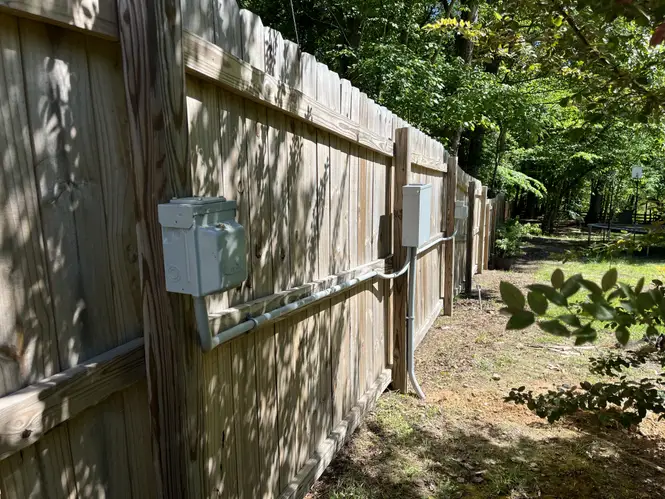
NGES field photo showing where conduit comes above ground along a fence. The visible section alone cannot tell you how much cover lies over the buried run.
To see a complete outdoor route, take a look at how we ran underground power from a venue building to its staircase lights. The project photos show the site and the fixtures at the entry columns.
Before anyone opens the yard
Code minimums for new work cannot tell you how deep an existing line is. Georgia 811 asks you to request a locate at least three business days before digging and check the utility responses before work starts. Point out privately owned lines to sheds, irrigation or landscape lighting. They may require a separate private locate. Confirm permit and inspection timing with the local building department before the trench is backfilled.
Planning power to a shed, workshop or detached garage in Metro Atlanta or North Georgia? North Georgia Electrical Services can review the route, the equipment you’ll run and any paved crossings. See our electrical trenching and boring services or call 404-502-8252 to discuss your project.